align27 Vedic Astrology Guide
- 3.7
- Rating
- 100.00K
- Installs
- Free
- Price

 Analysis by App-foxy
I approached align27 Vedic Astrology Guide as a lifestyle app for people who enjoy using astrology as a reflective tool rather than as a replacement for practical decision-making. Its focus is clear: horoscopes and natal birth charts, presented through a mobile experience that makes astrological information easier to revisit during an ordinary day. I found the idea most useful when I treated it as a prompt for self-reflection, not as a source of absolute answers.
The app comes from Gman Labs and is free to start, which makes it accessible to curious newcomers who do not want to commit to a paid astrology service immediately. It is rated for Everyone, runs on devices using Android 8.0 or later, and its current version is 4.6.5. There are optional purchases ranging from $4.99 to $499.99 per item, so I would encourage anyone interested to pay attention to what is included before spending money.
What makes this particular app worth considering is the combination of a daily horoscope habit and a more personal natal-chart approach. A general horoscope can be read in seconds, while a birth chart invites slower exploration. That difference matters: one is convenient for a quick check, and the other can become a longer-term reference point. The app works best when you understand which of those two experiences you actually want.
You May Also Like

 Pandora - Music & Podcasts
Pandora’s Music Is Easy to Start, but Harder to Recover
Pandora’s strength is its low-effort path from a seed to a station. Its weak spot is how much confidence it asks you to place in connection, setup, and quiet recovery.

 8 Ball Pool
 Is Built on Rivalries, Rematches, and Routine
A close look at the rivalries, rematches, shared routines, and unanswered safety questions that turn a quick pool match into a persistent mobile community.

 Samsung Music
’s Quiet Strength Is Playing What You Already Own
Its reach comes less from spectacle than from dependable access to a personal library. That simplicity is both the app’s strongest retention engine and its ceiling.

 AccuWeather: Weather Radar
AccuWeather Review: A Quick, Clear Forecast for Everyday Decisions
For everyday plans, the best forecast is the one you can understand quickly. AccuWeather makes rain timing, radar, and local conditions easy to act on, with a few trade-offs.

 Hill Climb Racing
Why Hill Climb Racing Still Turns Crashes Into One More Run
A tiny car, a bumpy hill and one more upgrade: Hill Climb Racing keeps resurfacing because its simple chaos makes every near-miss feel personal.

 AliExpress - Shopping App
AliExpress Makes Global Shopping Feel Personal, but Shoppers Bear the Risk
AliExpress turns a global marketplace into a pocket-sized discovery engine. Its reach is useful, its shopping loop compelling, and its trade-offs easy to miss.
More From Our News Desk
View All News


How the astrology experience works in everyday use
I use the everyday routine as a useful test of whether an astrology app earns a place on my phone: a reading should fit the moment, then leave me free to get on with the day. Here, the key distinction is between a brief horoscope check and the more deliberate work of exploring a natal chart. That difference also shapes how I would carry an insight beyond the screen.
Horoscopes are quick, but the birth chart rewards patience
The easiest way to use the app is to open it when you want a short astrology reading. This suits a morning routine, a quiet commute, or a moment when you want to think about the mood of the day. I like this kind of use because it does not require a large time commitment. You can read a horoscope, consider whether it connects with something happening in your life, and move on without turning the app into a major daily obligation.
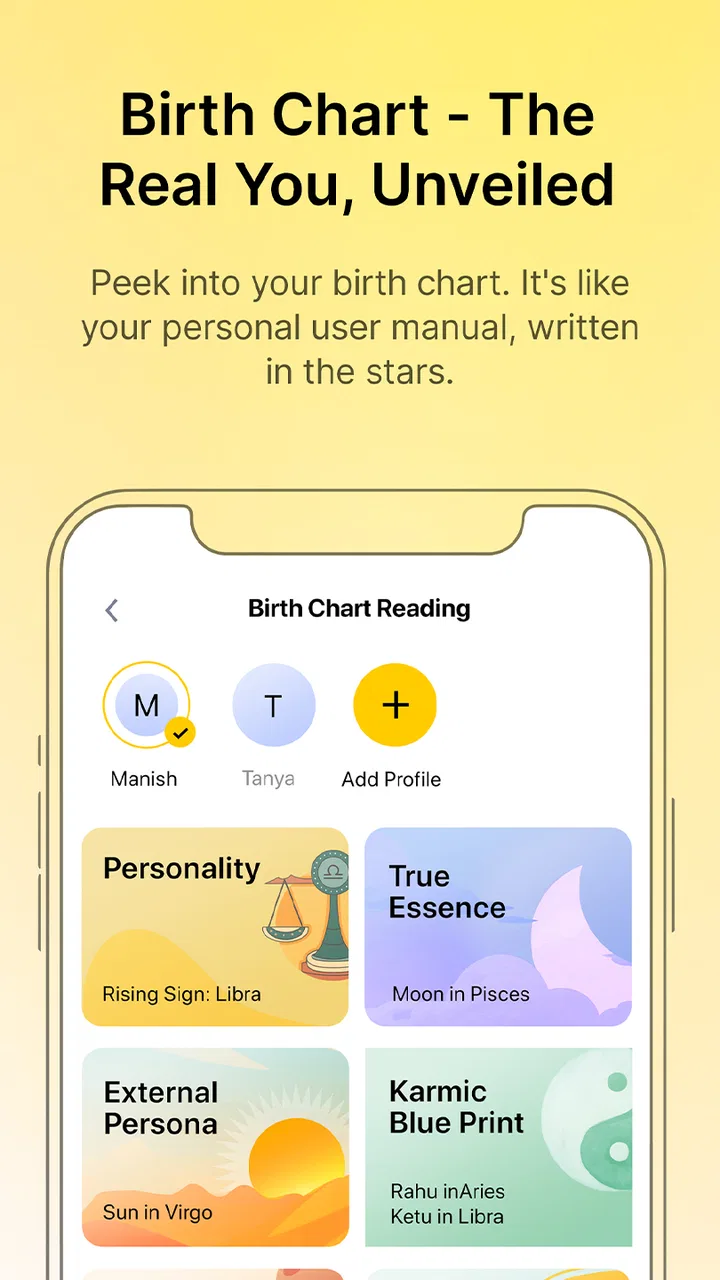
The natal birth chart is a different experience. Instead of offering a broad message aimed at a zodiac sign, it gives you a more personal framework based on birth information. That makes it more interesting for users who want to understand recurring themes rather than consume a new prediction every day. It also means that the quality of your experience depends on entering your details carefully and being willing to learn what the different chart elements mean.
One practical tip is to avoid trying to understand the whole chart at once. I found it more useful to choose one area, write down what the app says in your own words, and then return later. Astrology apps can easily become overwhelming when every symbol appears equally important. A slower approach makes the information easier to compare with real experiences instead of encouraging random scrolling.
Where connectivity changes the experience
Because this is a content-driven mobile app, connectivity can shape how smoothly it feels. When I have a reliable connection, opening a horoscope or moving through astrology material feels straightforward. In places with weak service, the experience can become less predictable: pages may take longer to appear, content may not load immediately, and a quick reading can turn into a wait.
This matters most in the situations where people are likely to use a horoscope app casually. Imagine checking it while standing outside a train station, sitting in a crowded café, or taking a short break at work. If the connection is unstable, the app loses some of its advantage over simply thinking through the day without it. I would treat it as a connected reading experience rather than assuming every part will always be available at a moment’s notice.
I also recommend opening the app before leaving a dependable network if you know you want to use it during travel. That is not a promise that every feature will remain available without a connection; it is simply a sensible habit for reducing frustration. The app’s value comes from the reading itself, so being prepared is better than discovering a loading problem when you have only a minute to spare.
A useful mobile routine instead of constant checking
The strongest mobile use case is a small, repeatable routine. For example, I would open the app after breakfast, read the horoscope without rushing, and note one idea that feels relevant to the day. In the evening, I could look back and decide whether that idea helped me notice anything about my mood or choices. This turns the app into a journaling prompt rather than a stream of predictions that I keep checking whenever I feel uncertain.
That distinction is important for people who are prone to overchecking. If you consult a horoscope before every decision, the experience can become distracting and may encourage you to hand too much authority to a general reading. I prefer using the app at set moments, especially when I want a little perspective. A birth chart is particularly well suited to this slower pattern because it is not something that needs to be reread from the beginning every few hours.
The phone format is convenient for private reading. You can explore the material without needing a book, a desktop computer, or a scheduled appointment. At the same time, the smaller screen is not ideal for comparing several chart elements at once. If you enjoy taking detailed notes or studying astrology seriously, you may eventually want to keep a separate notebook or use a larger screen for organizing your thoughts.
What to do when a reading does not load properly
Connectivity problems are not the only possible source of friction. A reading can also feel confusing when you are unfamiliar with astrological terminology, or when the app presents several pieces of information without making their relative importance obvious. My first response would be to slow down, check that the birth details were entered correctly, and reopen the relevant section rather than immediately assuming the interpretation is wrong.
If the app behaves inconsistently, I would close it and try again on a stronger connection. Keeping the installed version current is also sensible; the app is currently at version 4.6.5, so users should check that their installation is not significantly behind. These are ordinary recovery steps, but they matter more here because the experience depends on accessing specific content rather than simply launching a static utility.
I would also avoid making an important personal decision while trying to troubleshoot a horoscope screen. That may sound obvious, but it is an easy trap with any advice-oriented app. If the reading is unavailable, return to the practical question you were considering and use the app later as a reflective extra. That approach protects the usefulness of the app without making it responsible for choices it cannot realistically make for you.
Using it carefully on limited data
For people watching mobile data use, the most sensible pattern is selective access. Read what you came to read, avoid repeatedly refreshing the same material, and use a trusted connection when you plan to explore the birth-chart side in depth. I would not keep opening and closing the app throughout the day just to look for a different interpretation. That habit is unlikely to improve the quality of the experience and may consume more data than a short, intentional session.
There is also a personal-data consideration. A natal chart requires birth information, and some users may prefer not to enter such details casually into every app they try. Before creating a profile or making purchases, I would review the app’s current privacy and account information directly in the store or inside the app. I am not suggesting a particular policy; I am saying that birth details deserve the same thoughtful handling as any other personal information.
A good workflow is to decide in advance what you want from the session. If your aim is a quick daily horoscope, stop after that reading. If your aim is to understand your chart, choose one theme and take notes. This keeps both data use and attention under control. It also makes it easier to tell whether the app is genuinely helping you or simply giving you more material to consume.
Free access and the question of paid material
The free entry point is one of the app’s practical advantages. Someone who has never used a Vedic astrology guide can try the basic experience before deciding whether it fits their interests. That is especially useful because astrology is personal: some readers enjoy interpretive content immediately, while others find it too broad or too symbolic.
The optional purchases require more care. Individual items can cost from $4.99 up to $499.99, which is a very wide range. I would not purchase anything simply because a reading creates anxiety or suggests that an urgent paid answer is needed. First, use the free experience long enough to decide whether you like the app’s style, then check exactly what a paid item provides and whether it offers lasting value for your needs.
For casual users, the free portion may be enough. For committed astrology learners, a paid feature could be worth considering only if it adds depth that you will actually revisit. The trade-off is simple: convenience and personalization can be appealing, but a high price does not automatically make an interpretation more accurate or more useful. I would judge any purchase by clarity, relevance, and how often I expect to use it.
How it compares with familiar alternatives
Compared with a printed astrology book, this app is more convenient and easier to consult in short sessions. A book may offer broader background and a more deliberate learning path, while the app brings horoscopes and a personal chart into one pocket-sized experience. If you want quick access, the app has the clearer advantage. If you want a structured course in astrology, a well-written book may be easier to study.
Compared with a generic horoscope feed, the natal-chart focus gives this app a more personal direction. A simple feed can be entertaining, but it often stays at the level of broad zodiac messages. Here, the chart element encourages deeper engagement. The downside is that it asks more from the user: you need patience, accurate birth information, and a willingness to interpret rather than just skim.
Compared with consulting an astrologer, the app is more private, immediate, and affordable at the starting point. It cannot replace the back-and-forth of a conversation with a person who can ask questions and respond to your specific situation. I would choose the app for self-guided exploration and regular reflection, not for resolving a complicated life issue that requires human context.
Who will enjoy it, and who should skip it
I think it is a good fit for Android users who enjoy horoscopes, want to explore a natal birth chart, and prefer learning at their own pace. It also suits people who like reflective routines and are comfortable treating astrology as one perspective among many. The Everyone age rating makes it broadly approachable, although younger users should still be guided toward viewing predictions as entertainment or reflection rather than certainty.
I would be less likely to recommend it to someone who wants a completely offline tool, a highly structured astrology course, or professional counseling. It is also not the right choice for anyone who expects every reading to provide a precise answer to a serious decision. In those cases, a book, a specialist, or a qualified professional may serve the user better.
The app has attracted over 100K installs and holds a 3.7 average from around 1.4K ratings, with roughly 131 written reviews. Those figures suggest a noticeable user base, but they also point to a mixed experience rather than universal approval. I read that as a reason to try it thoughtfully, not as a reason to assume it will suit everyone.
My practical verdict on the connected experience
My recommendation is to use this as a deliberate, connected astrology companion. Open it when you have a stable connection, give the horoscope a few minutes of attention, and reserve the natal chart for calmer sessions where you can take notes and think. If a page fails to load, recover patiently and return later instead of letting the interruption influence an important choice.
The app’s best quality is the way it combines a quick daily entry point with a more personal chart-based path. Its main weaknesses are the dependence on a smooth mobile connection, the possible learning curve, and the need to approach optional purchases carefully. Those limitations do not ruin the experience, but they make expectations important.
For me, the most valuable way to use it is as a prompt for better self-observation, not as an authority over my life. If that matches what you want, the free starting point makes it easy to explore. If you need guaranteed offline access, detailed human guidance, or firm answers, I would choose another option instead. Used with that distinction in mind, align27 Vedic Astrology Guide can fit neatly into a thoughtful mobile routine without demanding constant attention.
FAQs for align27 Vedic Astrology Guide
01What is align27 Vedic Astrology Guide, and what does it offer?
align27 Vedic Astrology Guide is an astrology and self-reflection app based on Vedic astrology principles. It typically provides personalized guidance using birth details, planetary influences, zodiac information, and recommendations for daily life. The app is designed for users interested in understanding astrological patterns, exploring personal growth, and receiving structured insights rather than simply reading generic horoscope content.
02What information do I need to provide to use align27?
To receive more personalized results, align27 may ask for details such as your date of birth, exact birth time, and place of birth. These details are important in Vedic astrology because even a small difference in birth time or location can affect the calculated chart. Users should enter information carefully and review the app’s privacy policy before sharing personal data.
03Is align27 Vedic Astrology Guide suitable for beginners?
Yes, the app can be useful for beginners who are curious about Vedic astrology but do not yet understand concepts such as planetary placements, houses, or birth charts. Its guided explanations and personalized approach can make the subject easier to explore. However, some terminology may still require additional research, especially for users seeking a detailed or traditional astrological interpretation.
04Can align27 accurately predict my future or make important decisions for me?
The app should be treated as a source of astrological guidance and personal reflection, not as a guaranteed prediction tool. Astrology interpretations are subjective and should not replace professional advice from doctors, financial advisers, lawyers, or mental-health specialists. Important decisions should be based on reliable information, personal judgment, and qualified guidance rather than on an app’s horoscope or recommendation alone.
05Is align27 free to download, and are there in-app purchases?
The app may be available to download at no initial cost, but some features, reports, personalized guidance, or advanced content can require a subscription or in-app purchase. Pricing and available plans may vary by platform, country, and promotional offer. Before starting a trial or subscription, check the store listing for current costs, renewal terms, and cancellation instructions.
Pros
- Clear Vedic astrology explanations for beginners
- Personalized chart insights make readings more relevant
- Useful daily guidance for planning and reflection
- Clean interface makes navigation simple
- Covers multiple areas
- including relationships and career
Cons
- Some advanced features may require a subscription
- Astrology interpretations may feel too general for some users
- Birth details must be accurate for meaningful chart results
- Limited value for users who prefer scientific guidance
- Notifications may become repetitive over time

align27 Vedic Astrology Guide
Gallery